
The Mental Load in Marriage: How to Share the Work of Remembering
The groceries are put away. The appointment is booked. The birthday gift arrived on time. From the outside, the week looks handled.
But someone remembered the groceries were running low, compared appointment times, and ordered the gift before the shipping deadline. That work is easy to miss because much of it happens before anyone checks a box.
If you have ever thought, “I wish I didn’t have to ask,” you may be feeling the weight of the mental load. Making that work visible can help you and your partner build a more sustainable way to share it.
What is the mental load?
The mental load is the thinking that keeps daily life moving: noticing needs, considering options, making plans, and remembering to follow up. Sociologist Allison Daminger’s research describes these responsibilities as part of the cognitive work of running a household. Learn more about her research.
It can include knowing when the dog needs a refill, tracking school forms, remembering family birthdays, or realizing that a busy Thursday means dinner needs a plan on Wednesday.
This work exists in households with and without children. The person carrying it may look like they are resting while mentally organizing tomorrow.
Why “just tell me what to do” can feel exhausting
“Tell me what you need” may be a sincere offer. It can also leave one partner responsible for noticing, assigning, explaining, and checking the work.
Imagine that one person keeps track of every appointment while the other willingly drives when asked. The driving matters. So does remembering that an appointment needs to happen, finding a time, completing forms, and arranging the next visit.
When that coordination stays with one person, the offer to help may bring less relief than expected. One partner may feel constantly on call. The other may feel confused because they are contributing and still hearing that something is missing.
Start by naming the specific work each person is carrying. Include paid work, caregiving, household tasks, and the planning behind them. Leave room to discover responsibilities you have not seen.
Share ownership of the whole task
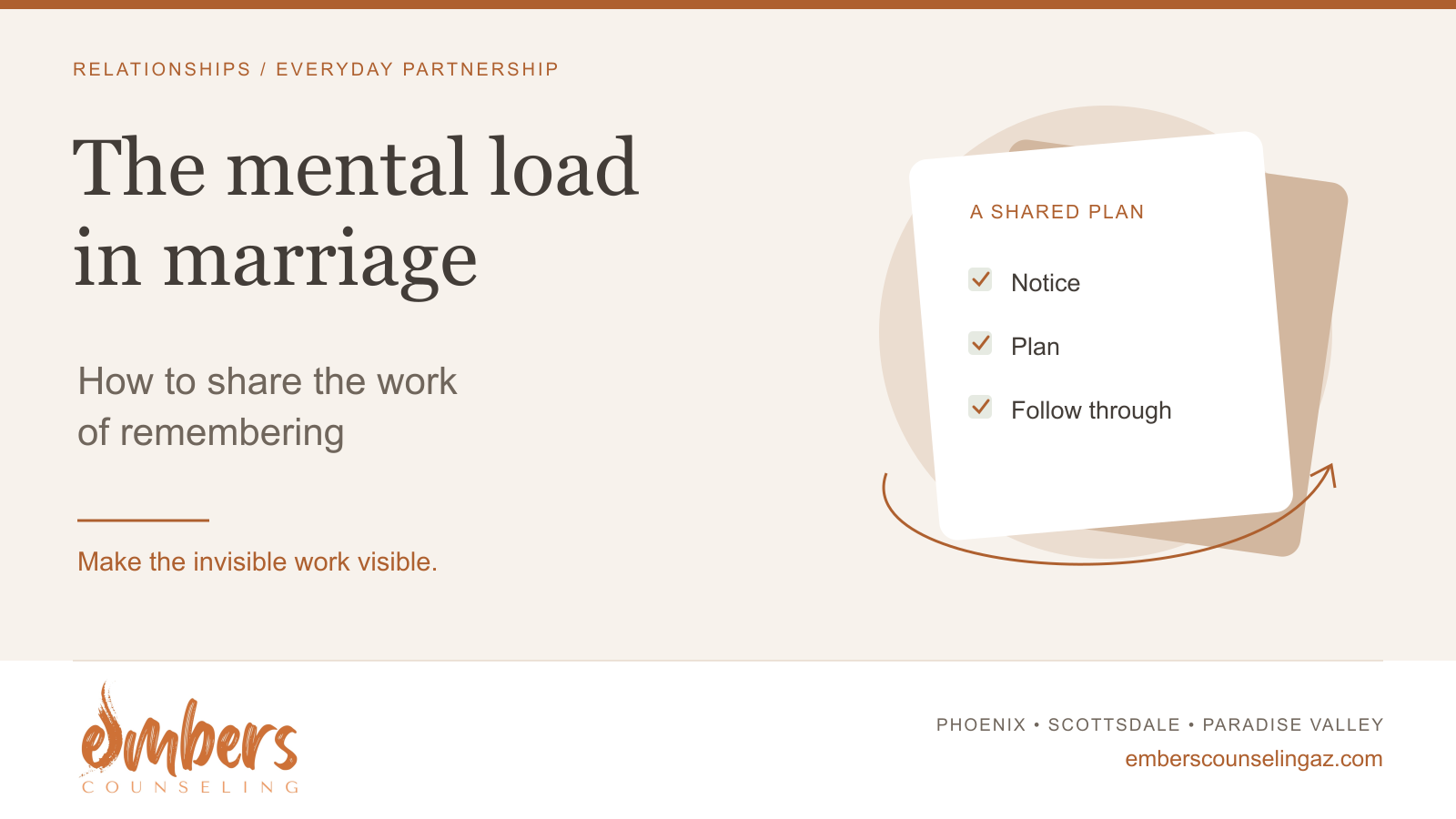
Choose one recurring responsibility and talk through what it involves from beginning to end. A useful starting point is: notice, plan, do, and follow through.
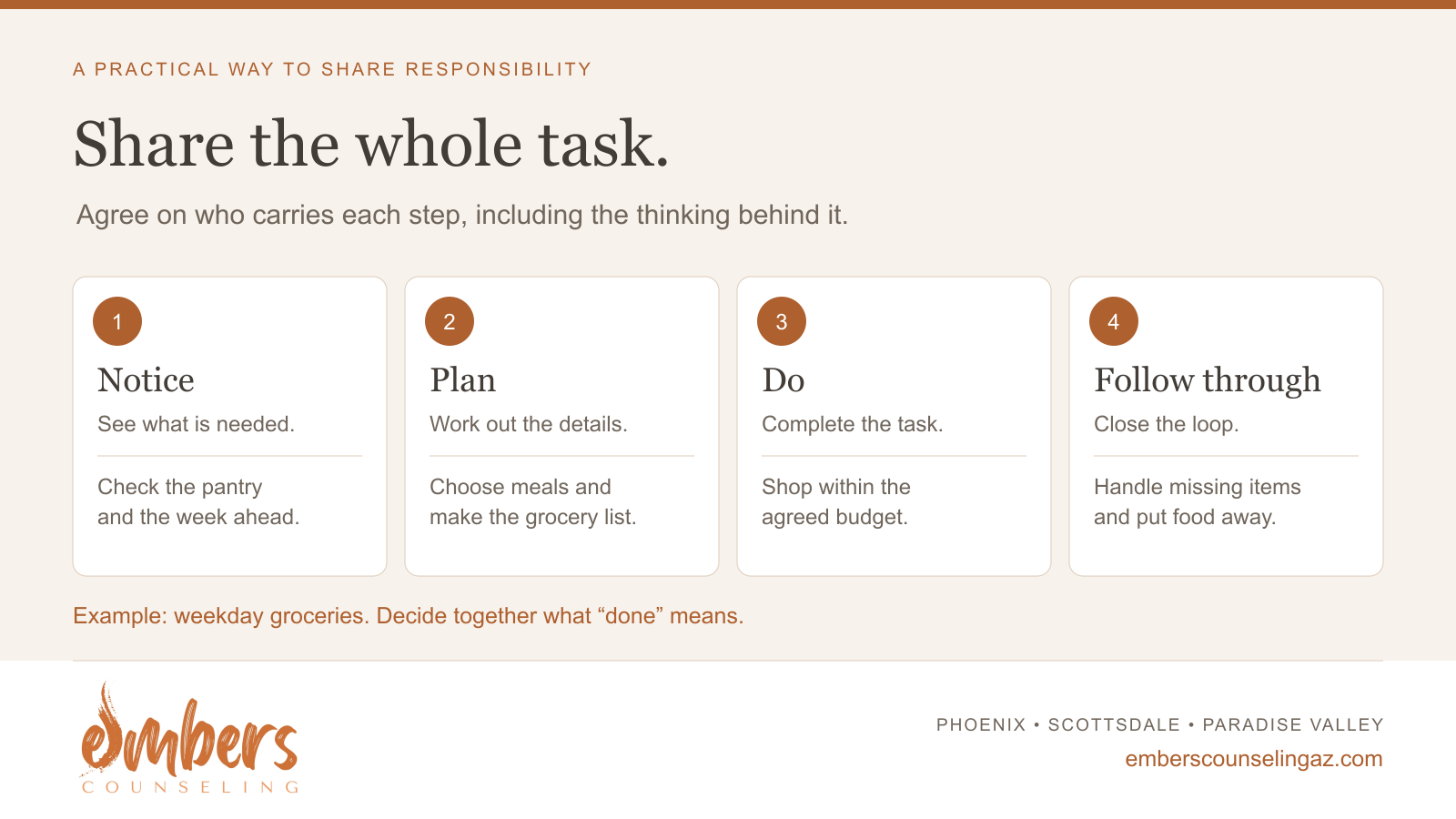
For example, owning weekday groceries could include checking supplies, choosing meals within the budget, making the list, shopping, and handling missing ingredients. Agree on the parts that need a joint decision, such as spending limits or dietary needs.
Then decide who will carry that responsibility for a trial period. The person taking it on can set their own reminders and create a system they will use. A shared calendar can help when both people maintain it.
Before you start, answer three questions:
What does “done” mean? Be specific about the outcome and timing.
What needs a shared decision? Agree on budget, safety, and other essential limits.
What happens if the plan falls through? Decide how to communicate and arrange backup.
A brief handoff may be necessary. Allow room for learning and different methods within the standards you agreed on. Repeated reminders or unfinished tasks are reasons to revisit the agreement.
Make the arrangement fit your actual lives
A workable division takes time, energy, health, work schedules, and caregiving demands into account. The same number of tasks can represent very different amounts of effort.
Ask: “Does each of us have dependable time to rest?” and “Can either of us step away without continuing to manage everything?”
If one partner is ill or working unusual hours, the balance may shift for a season. Name that shift and choose a time to review it. If both people are overloaded, simplifying meals, reducing optional commitments, or getting available support may matter as much as redistributing tasks.
Try a short weekly check-in
Choose a reasonably calm time and set aside about 15 minutes. Begin with one area of household life. Each person can name what feels heavy, listen to the other’s experience, and suggest one manageable change.
You might say:
“I’m finding it hard to keep track of all the appointments. Could you take responsibility for the dog’s vet care this month, including scheduling and follow-up? Let’s talk through what you need to get started.”
Or:
“I can see that waiting for instructions leaves the planning with you. I’d like to take ownership of weekday groceries. Can we agree on the budget and what needs to be ready?”
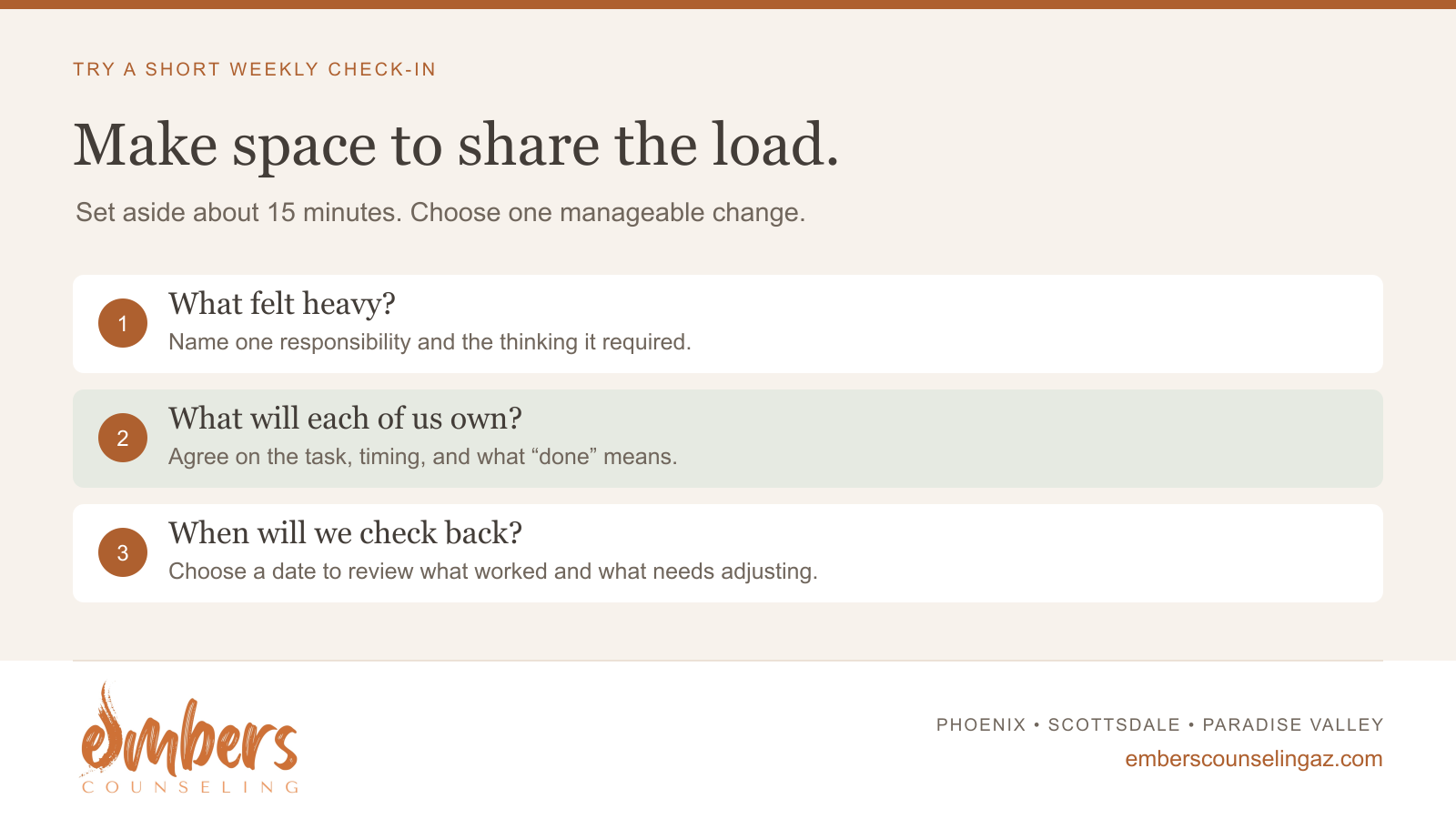
Finish with one clear agreement and a date to revisit it. At the next check-in, ask whether the change actually reduced the need to keep track. Adjust the plan based on what happened.
When the conversation keeps getting stuck
Sometimes a practical discussion brings up a larger hurt: “My effort goes unnoticed,” “I can’t depend on you,” or “I feel criticized every time I try.” Those feelings deserve attention alongside the division of tasks.
If conversations repeatedly turn into defensiveness, withdrawal, or resentment, couples counseling can provide space to understand the pattern and work toward clearer agreements. You may also find our post on why you keep having the same fight helpful.
Couples counseling at Embers Counseling
At Embers Counseling, we support couples navigating disconnection, conflict, and the demands of everyday life. Our Phoenix office serves the surrounding Scottsdale and Paradise Valley communities, and online counseling is also available.
If you would like support sharing responsibilities and rebuilding connection, explore our marriage counseling and couples therapy services or connect with us to get started.
Embers Counseling
4600 E. Shea Blvd., Suite 206, Phoenix, AZ 85028
(602) 341-5177