
Burnout: When Rest Doesn’t Feel Like Enough
There is a kind of tired that a good night of sleep can fix.
And then there is the kind where you sleep, take a weekend off, maybe even go on vacation, and still feel like you have nothing left to give.
You might notice that you have less patience than you used to. Tasks that were once manageable feel overwhelming. You feel disconnected from work, frustrated with people you care about, or guilty because you aren't as present as you'd like to be.
Sometimes people describe all of this with one word: burnout.
But burnout is more than having a difficult week.
The World Health Organization defines occupational burnout as the result of chronic workplace stress that hasn't been successfully managed. It involves exhaustion, growing distance or negativity toward work, and a reduced sense of effectiveness.
Importantly, burnout is classified as an occupational phenomenon, not a medical diagnosis.
And despite what we sometimes tell ourselves, the solution isn't always getting more sleep or taking another vacation.
Sometimes something needs to change.
What Burnout Actually Looks Like
Burnout doesn't always look dramatic.
Sometimes it's staring at an email for ten minutes because you can't bring yourself to answer it. Sometimes it's feeling irritated before your workday has even started. Other times, it's continuing to meet your responsibilities while feeling increasingly disconnected from everything you're doing.
The American Psychological Association identifies exhaustion, detachment, and reduced effectiveness as central characteristics of burnout.
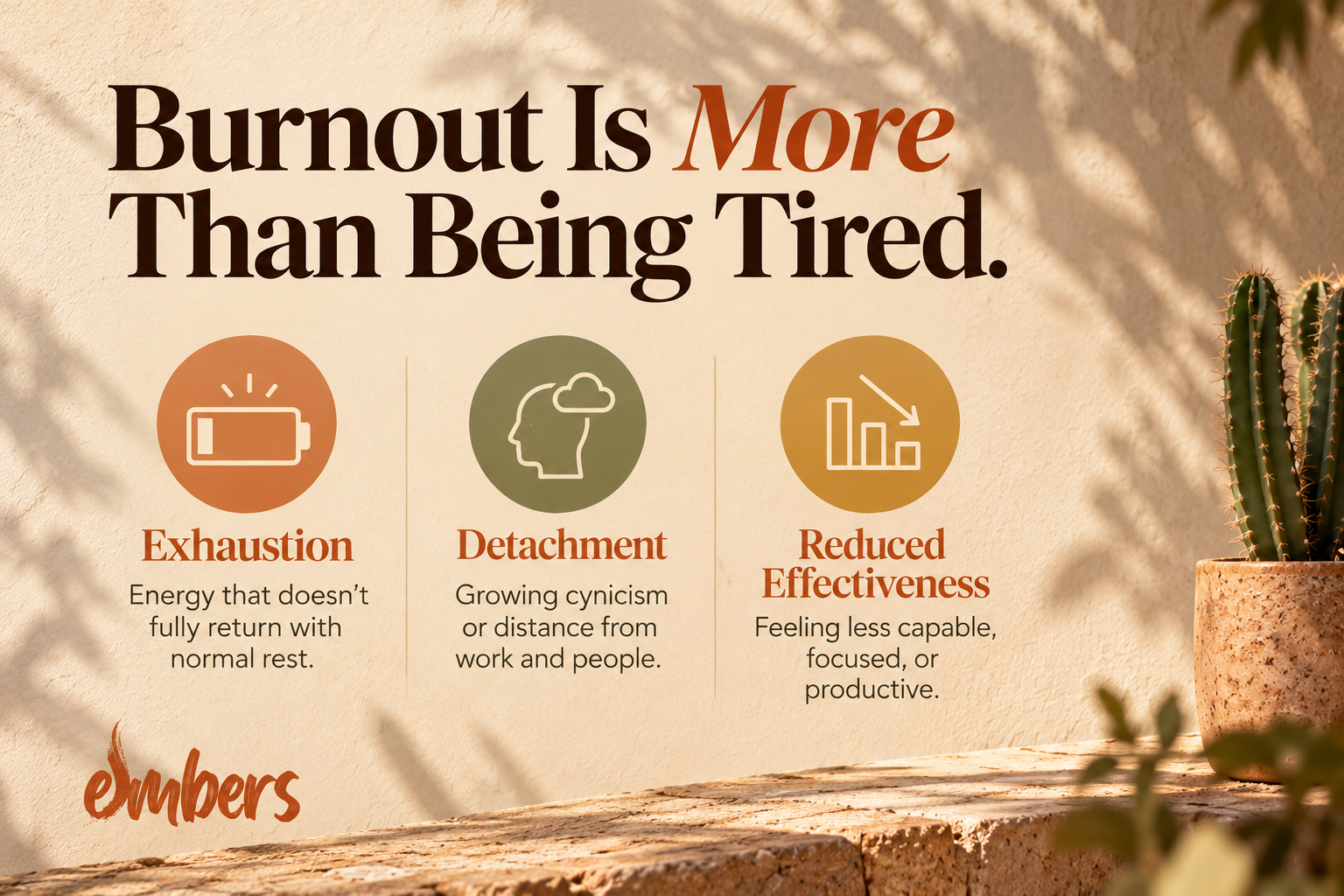
You might recognize some of these signs:
Feeling exhausted even after resting.
Becoming cynical about work you once enjoyed.
Struggling to concentrate or make decisions.
Feeling less capable despite working just as hard.
Withdrawing from coworkers, friends, or family.
Having little emotional energy left when you get home.
That last one is especially important.
Burnout may begin at work, but it doesn't necessarily stay there.
When Burnout Follows You Home
You don't leave your stress behind just because you've clocked out.
Research from the American Association for Marriage and Family Therapy (AAMFT) highlights how workplace demands can affect family relationships, parenting responsibilities, and the division of labor at home.
Think about what happens when you've spent an entire day using your patience, attention, and emotional energy.
Your partner asks a simple question, and it feels like another demand.
Your child needs something, and you find yourself getting irritated faster than usual.
You sit next to your spouse in the evening, but neither of you has much energy left for conversation.
Eventually, you may start wondering why you're acting differently toward people you genuinely love.
Sometimes the answer isn't that you care less.
It's that you've been operating with too little emotional margin for too long.
Burnout Isn't Always a Time-Management Problem
One of the biggest misconceptions about burnout is that it happens because someone isn't managing their responsibilities well enough.
But research suggests that our environments play a significant role.
Psychologist Christina Maslach, a leading researcher on burnout, identified six areas where a mismatch between a person and their work can contribute to burnout:
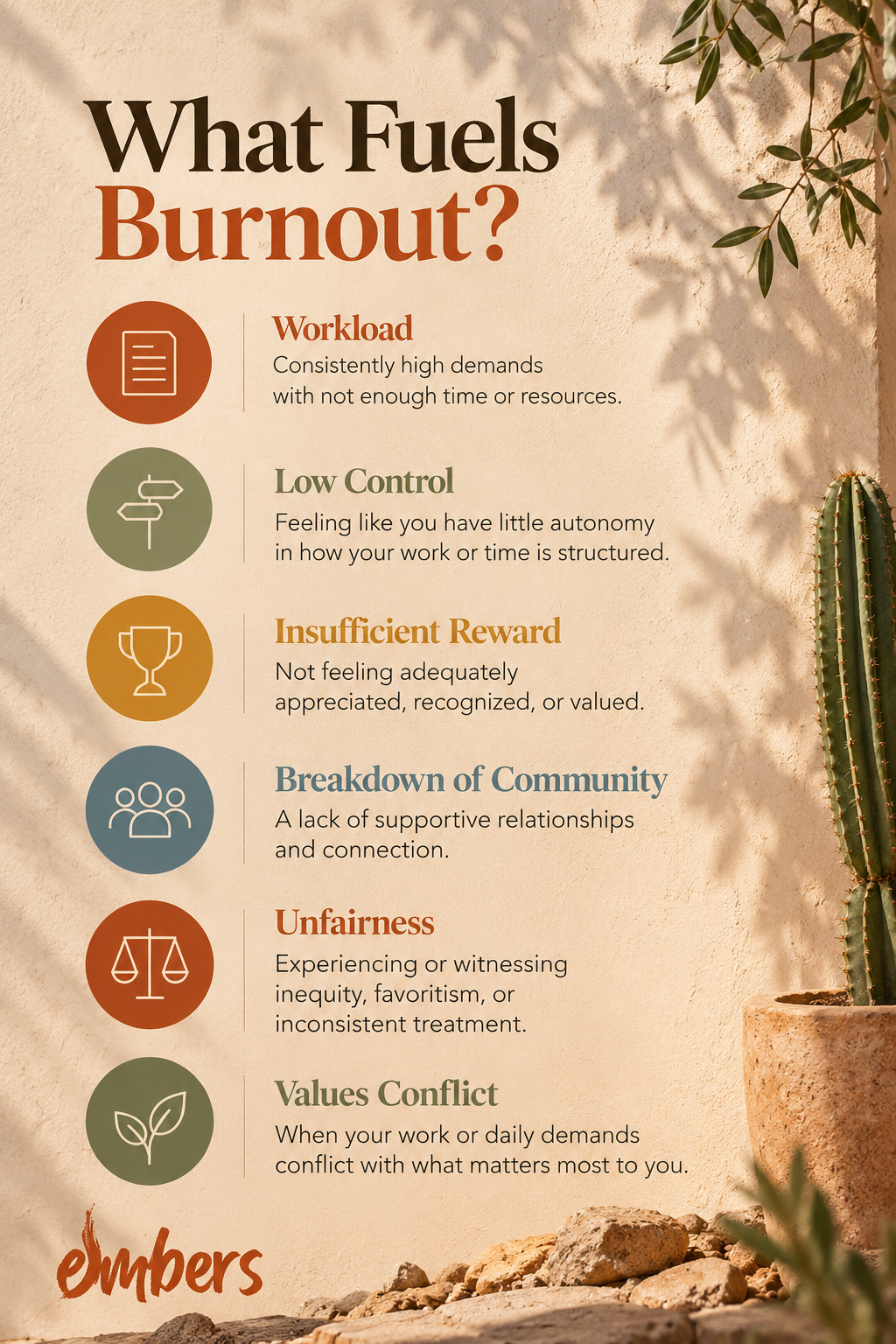
These include workload, control, reward, community, fairness, and values.
Gallup's workplace research similarly identifies unfair treatment, unmanageable workloads, unclear expectations, and insufficient support as major contributors.
This matters because you can have an excellent morning routine and still face an impossible workload.
You can exercise regularly and still feel exhausted by constantly changing expectations.
You can take a vacation and return to the same conditions that left you overwhelmed.
Rest is important, but sometimes the problem isn't how you're recovering. It's what you're repeatedly recovering from.
Why Burnout Can Affect People Who Care Deeply
Burnout isn't necessarily a sign that someone is lazy or disengaged.
Sometimes the people who struggle most are those who have spent years being dependable.
The employee who always says yes.
The parent who keeps everything running.
The business owner who never completely clocks out.
The helping professional who spends the day caring for everyone else.
People who take pride in their responsibilities may find it especially difficult to recognize when they've reached their limits.
And when your sense of worth becomes closely tied to being productive, capable, or needed, slowing down can feel uncomfortable.
Burnout doesn't mean you stopped caring.
Sometimes it means you've been giving more than you can sustainably maintain.
What Actually Helps With Burnout?
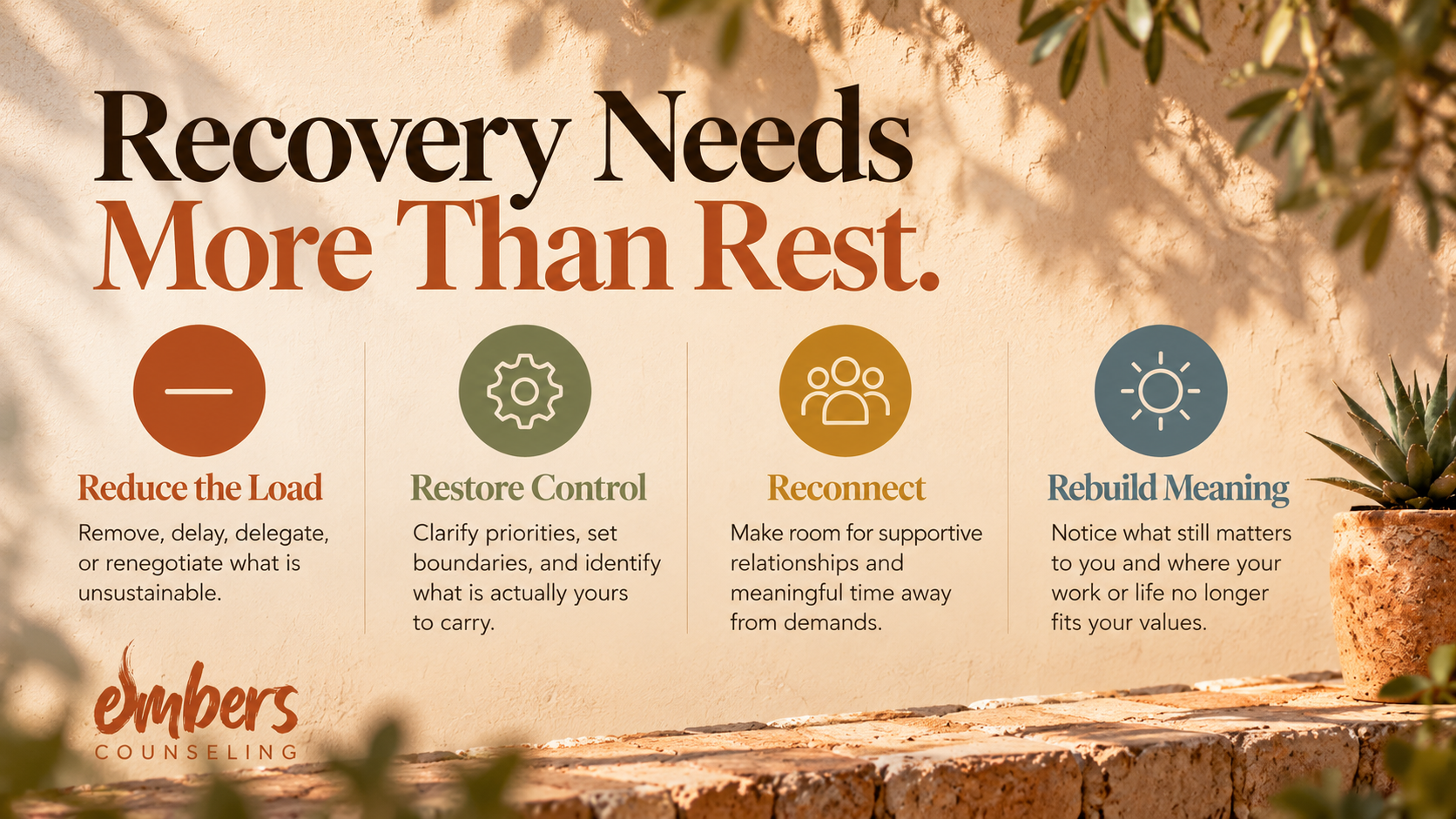
There isn't one solution that works for everyone, but burnout research points toward several important changes.
1. Reduce the load.
When you're genuinely overwhelmed, adding another self-care activity to your schedule might not help. Consider what can be removed, postponed, delegated, or renegotiated.
2. Restore some control.
Feeling powerless over your responsibilities can contribute to burnout. Clarifying expectations, establishing boundaries, and identifying what you can realistically influence may help.
3. Reconnect with people.
Burnout often makes people withdraw when connection could be helpful. Spending meaningful time with supportive friends, family members, or your partner can provide an important source of support.
4. Reconsider what matters.
Sometimes exhaustion comes from spending enormous amounts of energy on responsibilities that no longer align with your priorities. It may be worth examining where your time goes and whether that reflects the life you want.
The goal isn't simply to find enough energy to keep doing everything exactly as you've been doing it.
It's to figure out what needs to change so your life becomes more sustainable.
How Therapy Can Help
Therapy can't make an unreasonable workload reasonable, or eliminate every source of stress.
But it can help you understand patterns that may be contributing to your exhaustion.
Why is saying no so difficult? Why does resting make you feel guilty? Why do you feel responsible for everyone else's needs? Why does disappointing someone feel worse than exhausting yourself?
These questions can reveal patterns that have been developing for years.
For couples, therapy can also help when burnout has begun affecting the relationship.
Instead of viewing each other as the problem, partners can begin understanding how stress, exhaustion, and unmet needs have contributed to their disconnection.
Sometimes the conversation shifts from "You don't care about me anymore" to "We've both been stretched so thin that we haven't had much left for each other."
That creates an opportunity to approach the problem together.
You Don't Have to Wait Until Everything Falls Apart
Burnout often develops gradually.
You may notice yourself becoming more irritable, less motivated, emotionally distant, or increasingly overwhelmed by responsibilities that once felt manageable.
These experiences can also overlap with depression, anxiety, and certain medical conditions, so persistent symptoms deserve appropriate professional attention.
But you don't have to reach a breaking point before making changes.
Sometimes recognizing that your current pace isn't sustainable is enough to begin doing things differently.
Counseling for Burnout and Stress in Phoenix, Arizona
At Embers Counseling, we work with individuals and couples navigating stress, burnout, relationship difficulties, and patterns that have become difficult to manage.
Therapy provides an opportunity to understand what's contributing to your exhaustion, explore healthier boundaries, and work toward a more sustainable way of living.
If burnout is affecting your work, relationships, or ability to feel like yourself, reach out to Embers Counseling to schedule a consultation.
Research Sources
The article draws on research and professional guidance from the following organizations: